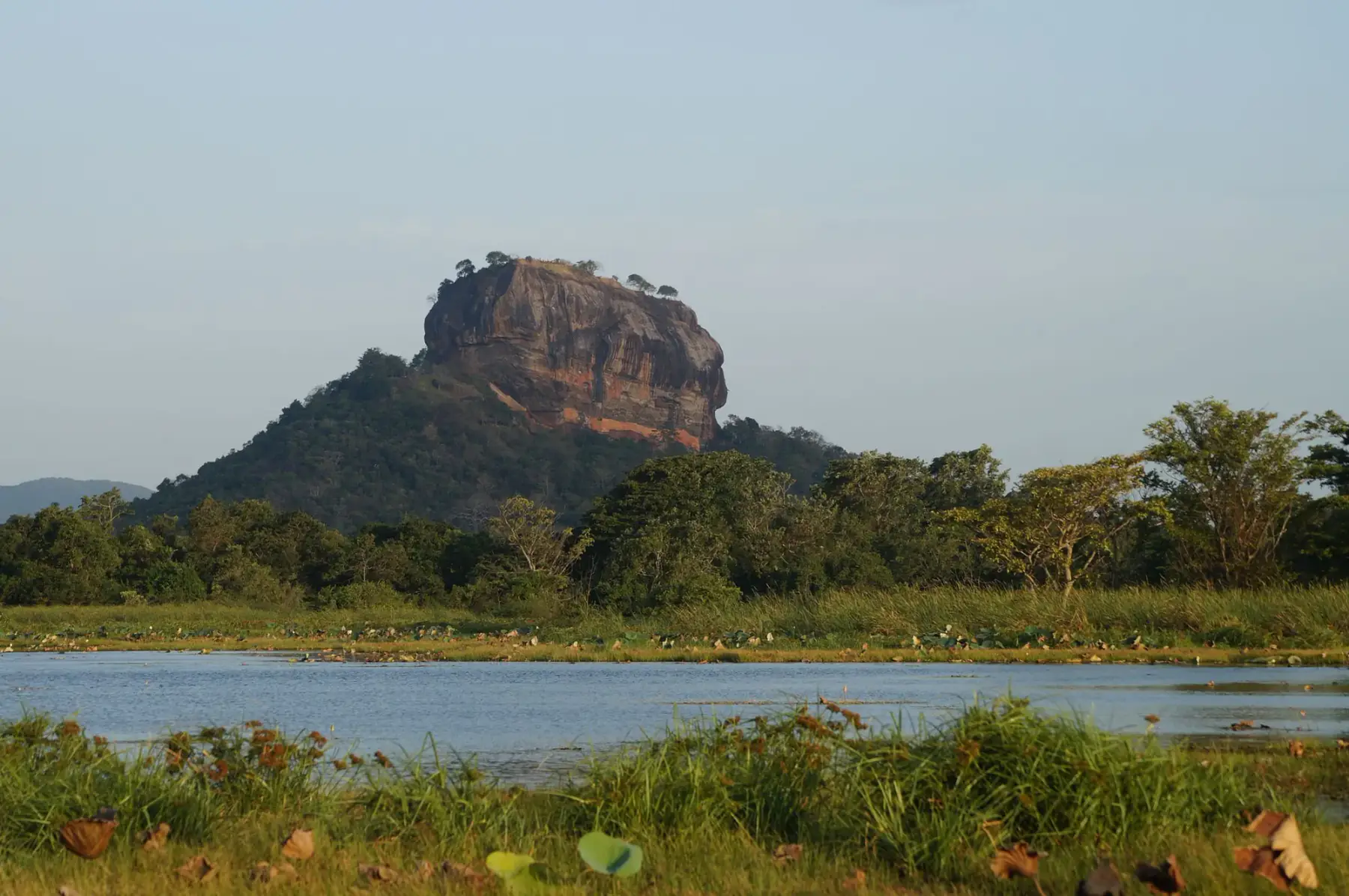
Ancient City of Sigiriya
A World Heritage property built across the slopes and summit of a granite peak used as King Kassapa I's capital.
Sigiriya is the ruins of King Kassapa I's capital, built across the steep slopes and summit of a granite peak that UNESCO describes as about 180 metres high. The Ancient City was inscribed on the World Heritage List in 1982.
Why Sigiriya matters
UNESCO's account places the capital in Kassapa I's reign, 477–495, and identifies the “Lion's Rock” access sequence: galleries and stairways once emerged through the mouth of a monumental lion built from brick and plaster. The property is more than a summit viewpoint; its designed approach and remains across the rock form part of the ancient-city story.
What the visit involves
The site includes an ascent using galleries and stairs across steep terrain. The official sources reviewed here do not establish one universal climb time or suitability level. Before buying a ticket, consider stairs, exposure, weather, mobility and the needs of everyone in the group.
The Central Cultural Fund publishes an official heritage-ticket channel and says prices can change with exchange rates. Use its current page rather than copying a price from an older article.
Plan the visit
- Check the Central Cultural Fund ticket page for the current ticket product and price.
- Confirm current opening, entry and any site instructions for your date.
- Check the weather and assess the physical demands before starting the ascent.
- Allow time for the wider archaeological property rather than treating only the summit as the attraction.
- Use the Sigiriya town guide for base selection and the Dambulla guide if the cave temple is also central to the route.
Is Sigiriya an official eighth wonder?
No UNESCO designation makes Sigiriya an official “eighth wonder of the world.” It is a World Heritage property inscribed under UNESCO's cultural criteria. The eighth-wonder fact check explains why those labels should not be treated as equivalent.
Decide whether to climb
The climb is part of the visit for many travellers, but it is not a requirement to ignore personal limits. Consider steep stairs, exposed sections, heat, rain, vertigo and the effect of crowds on the group. Ask the responsible authority about current conditions and accessibility; do not use an influencer's ascent time as a fitness test or promise.
If someone chooses not to complete the ascent, plan how the group will remain in contact and which lower parts of the archaeological property they can visit. A clear meeting point and enough time are more useful than pressuring every traveller toward the same endpoint.
Read the property from ground level
The approach, water gardens, defensive works and relationship between the rock and the designed landscape are part of the ancient city. Starting with that wider setting makes the visit more than a summit photograph. Use official interpretation on site and avoid repeating dramatic labels that are not supported by UNESCO or the Central Cultural Fund.
Fit Sigiriya into the Cultural Triangle
Sigiriya is often paired with Dambulla, Polonnaruwa or Anuradhapura, but each is a major decision with its own physical and cultural demands. Use the Cultural Triangle guide to choose anchors, then verify road time and opening arrangements. The Sigiriya-versus-Dambulla guide deals with base choice; it does not claim that one heritage property replaces the other. Pairing the rock with the caves on the same day? The Dambulla Cave Temple guide sets out the order, hours and tickets for Sigiriya and Dambulla in one day.
Leave operational claims to current sources
Tickets, opening hours, temporary closures, restoration work and route restrictions can change. Check the responsible authority close to travel. Do not climb closed sections, bypass barriers or rely on an old blog for permission. Weather and crowding may also change the sensible order of the day, so keep enough flexibility to delay or shorten the ascent.
Sources
Last verified 2026-08-28
Read next
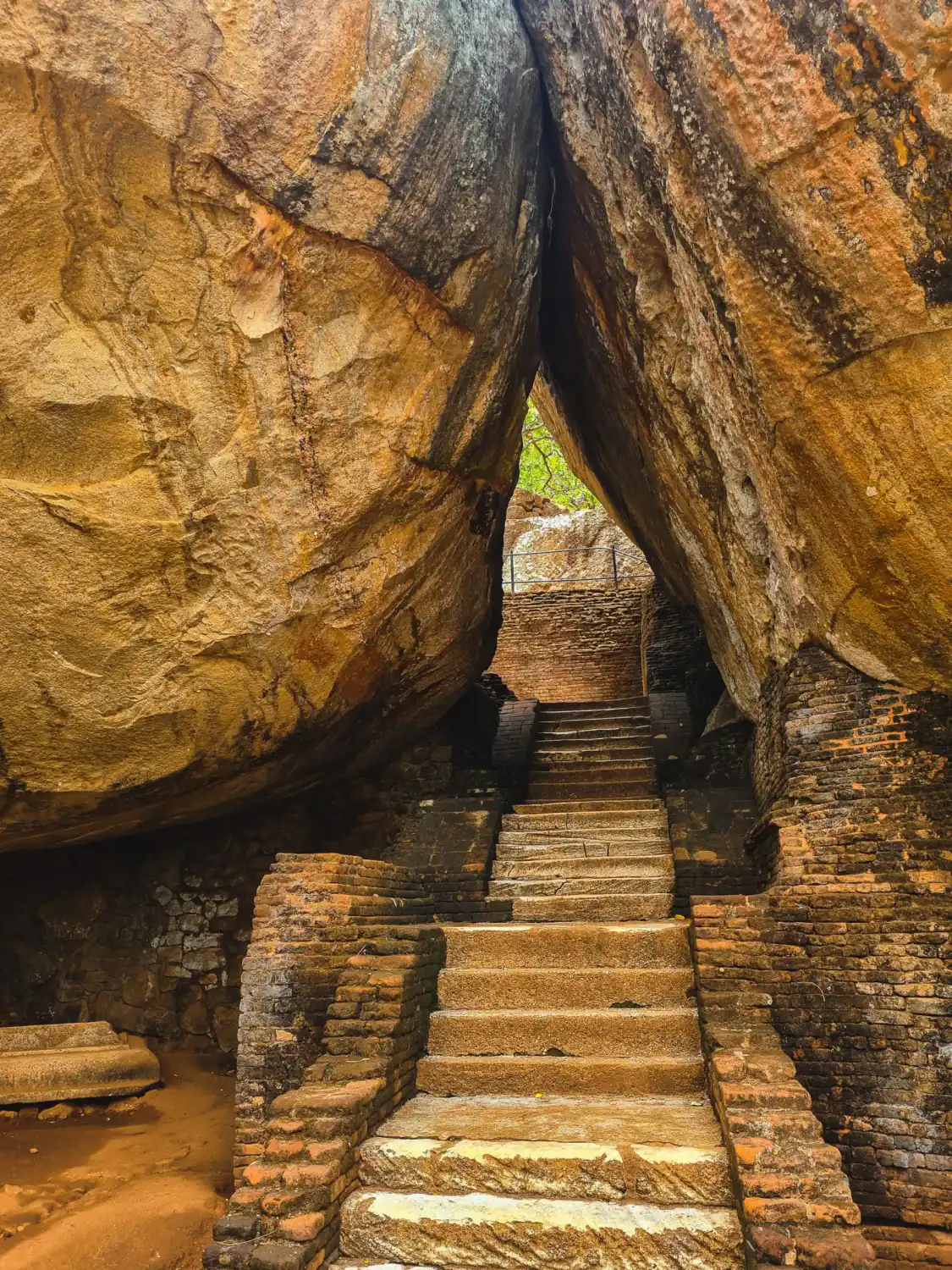
Is Sigiriya the Eighth Wonder of the World?
No official UNESCO designation names Sigiriya an eighth wonder; its verified status is the Ancient City of Sigiriya World Heritage property.
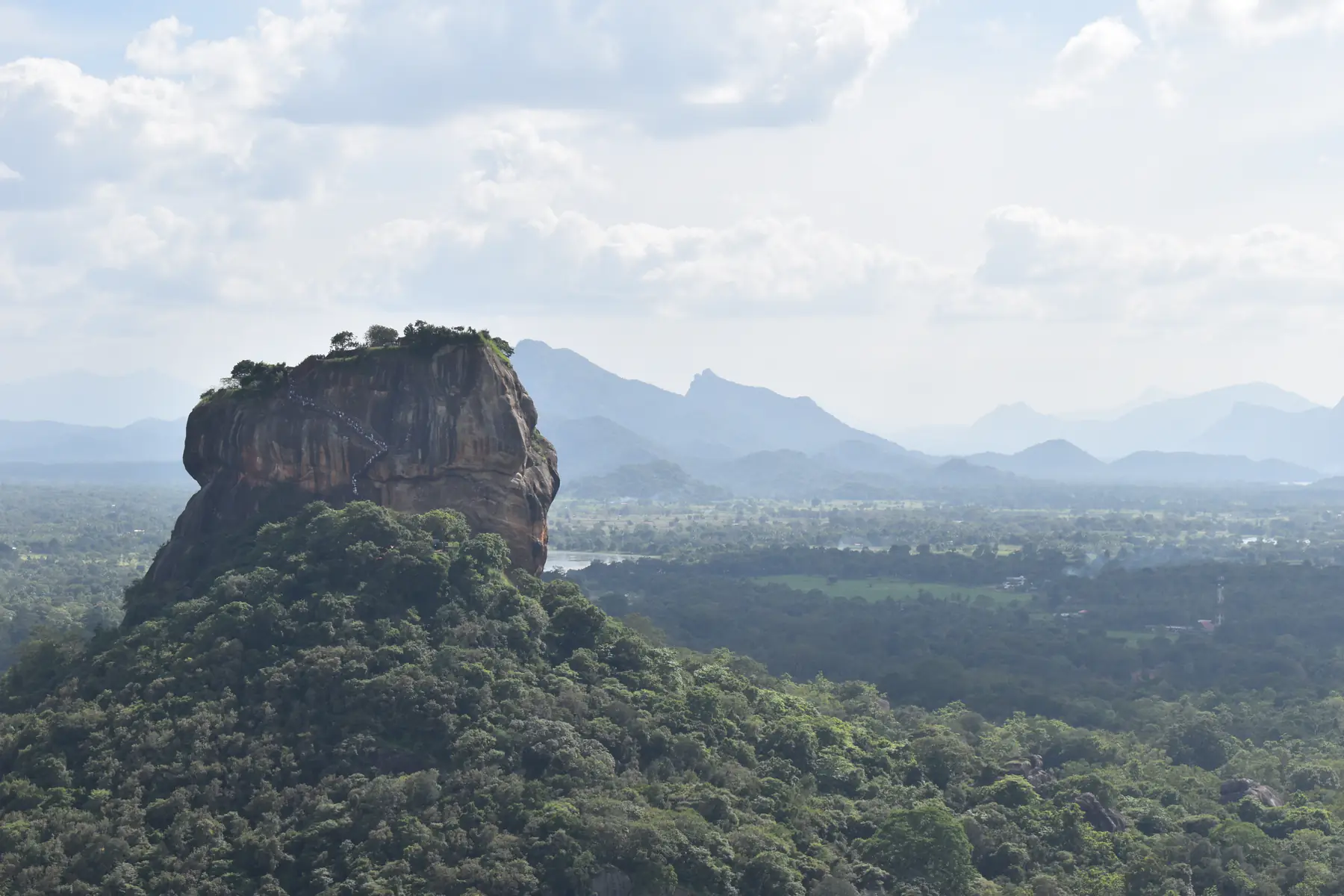
Sigiriya or Dambulla: Where Should You Stay?
Choose Sigiriya or Dambulla as a Cultural Triangle base by starting with the heritage site you want to prioritise and verifying each transfer.
How much does a Sri Lanka trip cost?
Sri Lanka trip costs in GBP, USD, EUR and JPY at the Central Bank rate of 16 Oct 2026: official tickets and fares, SLTDA daily spend, and room, surf and garden prices sampled from businesses' own pages on 17 Oct 2026.
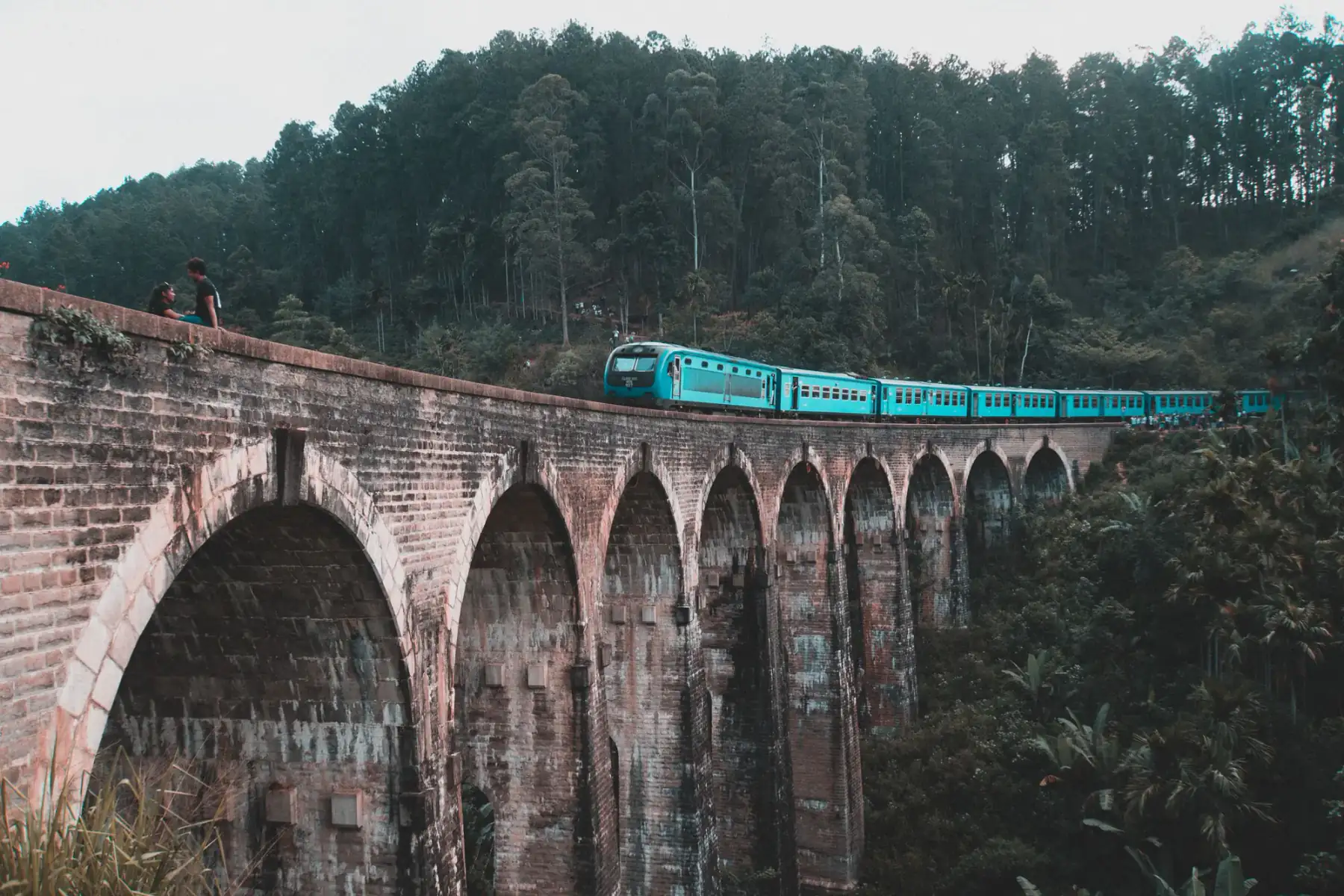
Classic Sri Lanka: South, Hills and Cultural Triangle
A day-by-day 10-day Sri Lanka itinerary: Sigiriya, Dambulla, Kandy, the Nanu Oya to Ella train, Galle and Mirissa, with dated ticket and fare costs checked 17 October 2026.
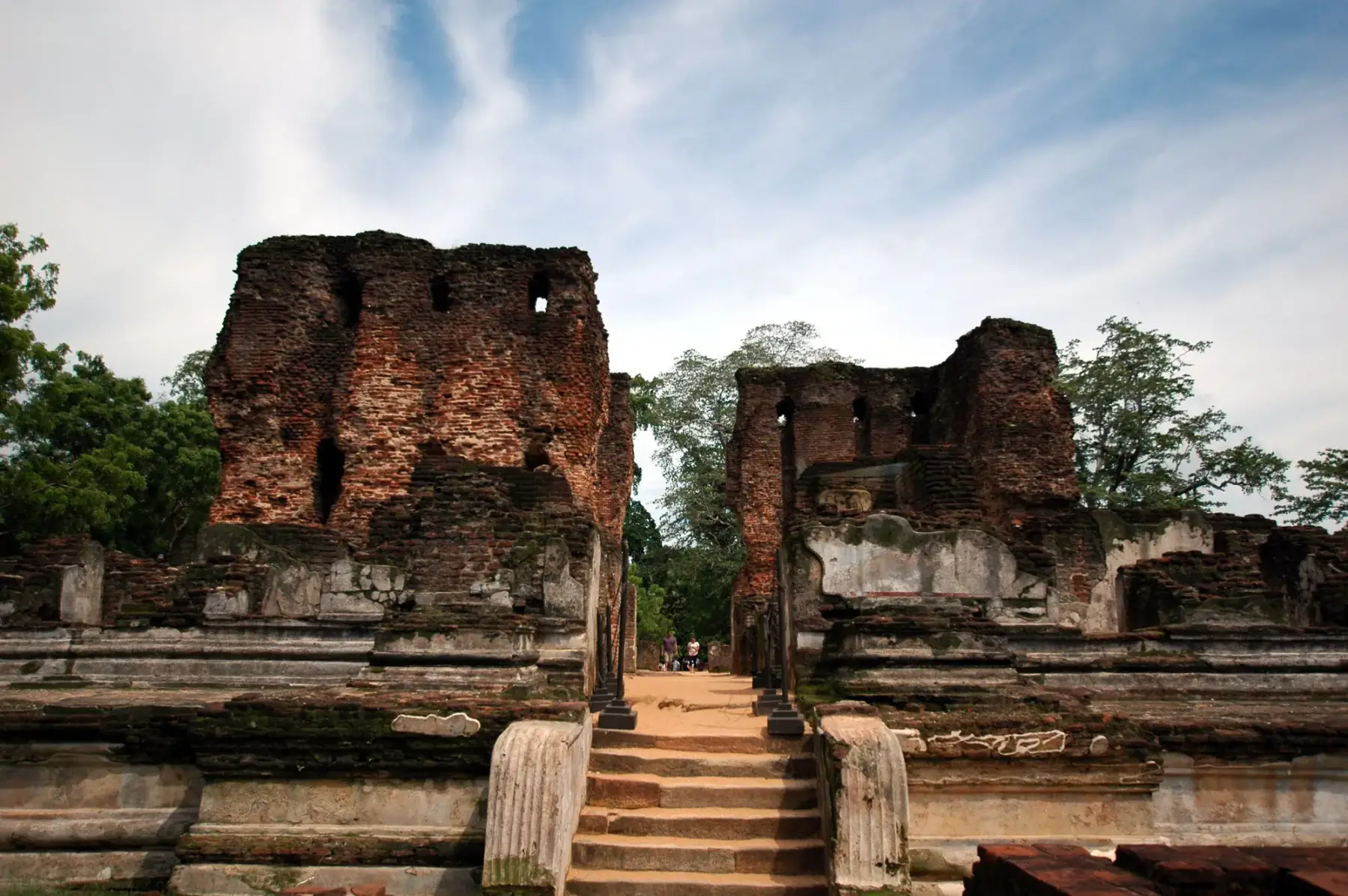
Cultural Triangle and Heritage Focus
A five-day heritage framework connecting Sigiriya, Dambulla, Anuradhapura, Polonnaruwa and Kandy without pretending every site fits one rushed loop.
One Week, First Visit
A focused 7-day first route through the Cultural Triangle, with Anuradhapura, Sigiriya and Dambulla instead of a four-region sprint.
Sri Lanka in 3 Weeks
A 21-day Sri Lanka itinerary: Anuradhapura, Sigiriya and Dambulla, Kandy, the hill country by road and the Nanu Oya to Ella train, Yala, then a slow week on the south coast. Includes an east coast version for May to September. Checked 17 October 2026.
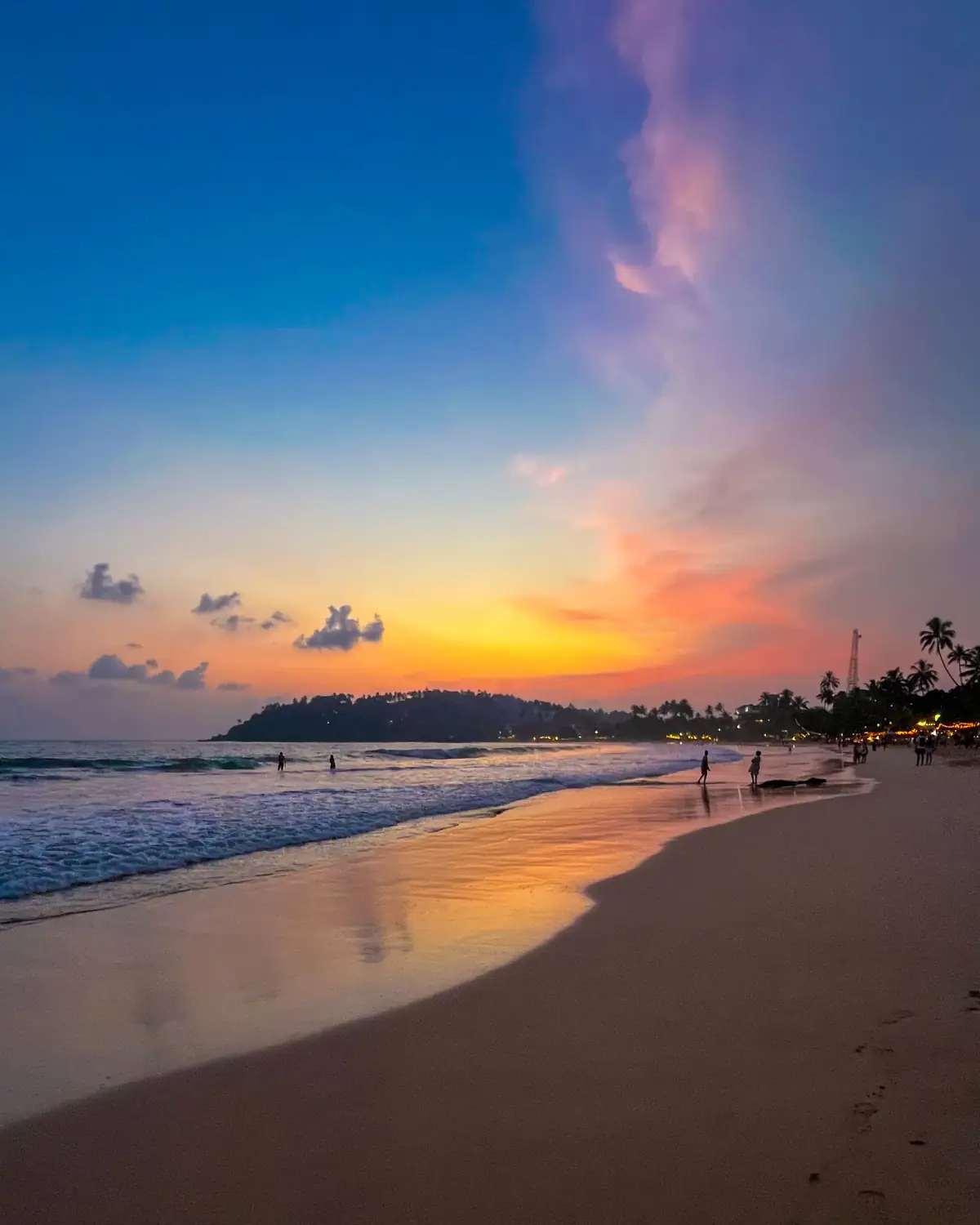
Sri Lanka and Maldives: 10 Days or 2 Weeks
A Sri Lanka and Maldives route for UK travellers and honeymooners: about six days in Sri Lanka and four in the Maldives on a 10-day trip, or nine and five over two weeks, with the island time at the end. Entry rules checked 11 October 2026.
Two Weeks, Standard Pace
A day-by-day 2-week Sri Lanka itinerary: Sigiriya, Dambulla, Polonnaruwa, Kandy, Ella by the Nanu Oya train, a Yala safari, Galle and Mirissa, with dated ticket and fare costs checked 17 October 2026.
More places in this region
Ancient City of Polonnaruwa
UNESCO 1982 · HeritageSri Lanka's second capital after Anuradhapura, with Chola-period Brahmanic monuments and the 12th-century city associated with Parakramabahu I.
Jaya Sri Maha Bodhi
Sacred siteA living Buddhist pilgrimage place at the centre of Anuradhapura's sacred-city tradition.
Mihintale
Sacred siteAn active Buddhist pilgrimage and archaeological landscape near Anuradhapura, traditionally linked to Buddhism's arrival in Sri Lanka.