Best Time to Visit Sri Lanka, Month by Month
Choose when to visit Sri Lanka by matching your route to four broad rainfall seasons, then confirm the forecast for your actual destinations.
Quick answer: For the south and west coasts, go outside May to September; for the east coast, avoid December to February.
Sri Lanka's Department of Meteorology puts the north-east monsoon in December to February and the south-west monsoon in May to September. October and November bring thunderstorms anywhere on the island, so keep your route flexible.
Sri Lanka Tourism says north-east winds make the south-western coast sunny with a calm sea from November to March, and that December to February is the peak tourist season on that coast. During the south-west monsoon it points travellers to the dry zone: Trincomalee, Arugam Bay and Jaffna. Those coast windows do not apply to the hill country: Tourism says the south-west monsoon brings heavy rainfall on the southwest coast and hills. If your dates are fixed, reverse the decision: choose the region with the more workable seasonal pattern, then check the forecast for the actual destinations. Once the dates are realistic, use the trip-cost guide for current visa, ticket and fare checks.
That is not a guarantee of sunshine, calm seas or uninterrupted transport. Sri Lanka's climate is regional, and the condition that matters depends on the trip: rainfall for a walking day, sea state for a boat, visibility for a viewpoint, or current access for a park or heritage site.
Month by month at a glance
The table below restates the Department of Meteorology's four rainfall seasons as a 12-month planning screen. It is not a sunshine forecast.
| Month | Official season | South and west | East and north |
|---|---|---|---|
| January | North-east monsoon | Often the more workable coast | Extra rainfall and access checks |
| February | North-east monsoon | Same as January | Same as January |
| March | First inter-monsoon | Afternoon or evening thunderstorms can occur island-wide | Same island-wide caution |
| April | First inter-monsoon | Same as March | Same as March |
| May | South-west monsoon | Extra attention to the south-west | Worth investigating |
| June | South-west monsoon | Extra attention to the south-west | Worth investigating |
| July | South-west monsoon | Extra attention to the south-west | Worth investigating |
| August | South-west monsoon | Extra attention to the south-west | Worth investigating |
| September | South-west monsoon | Extra attention to the south-west | Worth investigating |
| October | Second inter-monsoon | Neither coast is a reliable dry pick | Neither coast is a reliable dry pick |
| November | Second inter-monsoon | Same as October | Same as October |
| December | North-east monsoon | Often the more workable coast | Extra rainfall and access checks |
Sri Lanka's four rainfall seasons
Sri Lanka's Department of Meteorology divides the year into four broad rainfall seasons:
| Period | Official seasonal description | What it means for planning |
|---|---|---|
| December to February | North-east monsoon | Give extra attention to forecasts and operating conditions in eastern and north-eastern areas. |
| March and April | First inter-monsoon | Afternoon or evening thunderstorms can occur across the island; avoid treating either coast as guaranteed. |
| May to September | South-west monsoon | Give extra attention to the south-western part of the country; investigate an east-coast route when dates are fixed. |
| October and November | Second inter-monsoon | Island-wide afternoon or evening thunderstorms are possible, and this inter-monsoon is generally wetter than the first. |
The Department describes long-term climatic patterns. A seasonal label cannot tell you whether it will rain in Galle, Trincomalee or Ella on a particular day. Use the Department of Meteorology for current forecasts close to departure.
Sri Lanka weather month by month
The month-by-month guide below translates the four official seasons into route decisions. Where adjacent months share a season, the same broad caution applies. That repetition is intentional: the evidence does not justify inventing a different promise for every calendar page.
January
January falls in the north-east monsoon. An east- or north-east-led trip should be checked carefully against current rainfall and local operating conditions. A south- or west-coast route may present a different seasonal trade-off, but it still needs a live forecast and beach-level safety check. On the WMO 1991 to 2020 normals, Colombo averages 79.6 mm of rain in January and Batticaloa 268.9 mm. The Sri Lanka in January guide has 11 towns in C and F and the January 2027 holidays.
February
February remains within the north-east monsoon period. Use the same regional screen as January, then compare the forecast for each anchor destination. Do not assume that the end of the official season produces an exact switch on a fixed date.
March
March begins the first inter-monsoon. Thunderstorms can occur across the island, often in the afternoon or evening according to the Department's seasonal description. A flexible daily sequence is more useful than choosing a coast from a simple dry-versus-wet map.
April
April is also part of the first inter-monsoon. If walking, a scenic viewpoint or a boat trip is central to the holiday, give that weather-sensitive activity an alternative day. Confirm public-holiday and festival effects separately because a climate source does not establish opening hours, crowds or transport changes.
May
May begins the south-west monsoon period. Travellers with fixed dates can compare an east-coast route with a south- or west-coast plan, but should also count the transfer required to reach the chosen coast. A theoretically better seasonal fit may still be a poor choice for a short itinerary if it consumes too much of the trip in transit.
June
June sits within the south-west monsoon. The east coast, including Trincomalee, Batticaloa or Arugam Bay, is worth investigating for a coast-led trip. That does not prove suitable swimming, surf, snorkelling or boat conditions at a particular beach.
July
July remains within the south-west monsoon period. Choose the coast by the exact activity, not only the word “beach.” A surf break, protected-area boat visit and general beach stay depend on different conditions and operating decisions.
August
August follows the same broad south-west monsoon pattern. If a multi-region trip includes both the Cultural Triangle and a coast, decide which places are non-negotiable before choosing the coastal leg. The east-or-south coast comparison provides a route-and-activity decision rather than a weather promise.
September
September is the final month in the Department's broad south-west monsoon period. Do not assume conditions change at the start of October. Check the current forecast, marine information and local operating advice for the dates that matter.
Sri Lanka in October
October begins the second inter-monsoon, which the Department of Meteorology describes as generally the wetter of the two inter-monsoons, with afternoon or evening thunderstorms possible across the island. Neither coast is a reliable dry-season pick in October: compare routes by what you want to do rather than by a seasonal slogan, and keep a weather alternative for the most important outdoor day. Our Sri Lanka in October guide has the Department of Meteorology's October 2026 forecast, district rainfall averages and what is open this month.
- Where to go: the official climate description gives October convective rain that falls "mainly in the afternoon or evening" and "anywhere over the Island", with depressions adding to the totals — so no region counts as seasonally dry. The south-west is past its wettest period (May-to-September monsoon rain falls "mostly over the South-western parts of the Island"), and the eastern half's wetter north-east monsoon does not begin until December. Choose anchors for what you want to do, then check each forecast separately.
- Surf: October sits outside the south-west monsoon period, which ends in September, so the seasonal pattern shifts — but break choice still depends on current swell, wind and ability. The surfing guide explains the checks.
- What's closed: Yala Blocks 1 and 2 were closed to the public for a drought closure that began on 14 September and will reopen from 6 am on 16 October 2026, with park bungalows and campsites reopening for reservations from 1 November; see the Yala National Park guide before booking a safari in October.
Sri Lanka in November
November remains in the second inter-monsoon, so island-wide afternoon or evening thunderstorms are still possible. Avoid assigning the whole island one reliable beach region from a historic average; check each named stop separately and avoid making a same-day transfer the only route to a fixed activity. Our Sri Lanka in November guide has the Department of Meteorology's November 2026 forecast, district rainfall averages, whale-watching and holiday dates.
- What's open and what to confirm: Yala Blocks 1 and 2 will reopen from 6 am on 16 October 2026, and park bungalows and campsites will reopen for reservations from 1 November; check the Yala National Park guide for the latest, and check festival and public-holiday effects through the festival calendar guide before fixing dates.
December
December begins the north-east monsoon. An eastern or north-eastern route needs the same extra scrutiny described for January and February. If the south or west is the alternative, compare named destinations, current marine conditions and the total route rather than selecting an entire coastline from a seasonal slogan. For Christmas and New Year, coast-by-coast temperatures and school holiday dates, read Sri Lanka in December.
Choose the best time by region
South and west coasts
The south-west monsoon mainly affects the south-western part of Sri Lanka from May to September. That makes the seasonal pattern an important screen for Galle, Mirissa, Hiriketiya, Hikkaduwa and other southern or western stops. It does not establish whether one beach is safe for swimming or whether a whale-watching boat will depart.
If these places are the core of the trip, compare proposed dates with the official seasonal period and then check live forecasts and marine information. If the dates are fixed inside the south-west monsoon, decide whether heritage, food, town exploration or an inland alternative would still make the route worthwhile if water-based plans change.
East and north-east coasts
The north-east monsoon mainly affects eastern and north-eastern areas from December to February. During the south-west monsoon period, travellers often investigate an east-coast route instead. The useful choice still depends on whether the priority is Trincomalee's heritage and nearby coast, Batticaloa's lagoon-city context, or surfing around Arugam Bay.
An east-coast label does not guarantee one condition along the entire shoreline. Verify the named beach, activity and operator.
Cultural Triangle and north-central route
The Cultural Triangle is an inland heritage route rather than a coast. The four official rainfall seasons still provide context, but the main planning questions also include heat exposure, the physical demands of a site and whether an outdoor visit can move to another part of the day. Current site access comes from the responsible heritage authority, not from a weather article.
For a Sigiriya, Dambulla, Polonnaruwa or Anuradhapura route, identify which visit is hardest to move. Keep other stops flexible around it and check the local forecast rather than applying Colombo's forecast to the whole region.
Hill country
Do not assign the hill country the same simple label as a coast. Elevation and position within the Central Highlands change the planning context. Rain, cloud and visibility can affect a viewpoint or walk differently from a town-based cultural day.
Check the forecast for Kandy, Nuwara Eliya, Hatton or Ella individually. Keep an alternative for visibility-dependent activities, and verify rail operation independently because weather season does not prove a train will run.
Northern Sri Lanka
A northern route should be checked against the north-east monsoon period and the forecast for the actual stops. Jaffna, Delft Island and a long transfer are separate operational decisions. Island access, ferry or road conditions and sacred-site arrangements require current local confirmation.
Choose the best time by trip type
Beach holiday
Begin with the coast's broad seasonal exposure, then narrow the decision to a named beach. Check rainfall forecast, wind and sea information, local warning signs and the suitability of the water for the intended activity. “Dry season” is not a safety certification.
Surf trip
Surfing depends on the break, swell, wind, hazards and surfer ability. A broad seasonal pattern can help choose which coast to investigate, but it cannot select a safe session. The surfing guide explains the break-level checks.
Diving or snorkelling
Rainfall, visibility, currents, protected-area access and operator decisions can all affect the plan. Confirm the exact site and current conditions. For Pigeon Island, check Department of Wildlife Conservation access and the authorised permit process rather than relying on an old seasonal roundup.
Whale watching
A historical season does not guarantee a boat departure or sighting. Use current marine conditions, the operator's weather decision and applicable Coast Guard guidance. The whale-watching guide explains what can and cannot be promised.
Wildlife safari
Weather affects roads and comfort, but this guide does not translate a month into a sighting forecast. Check current park access and permits, then choose a park by route fit and tolerance for documented visitor pressure. Use the national-parks comparison for that decision.
Heritage and pilgrimage
Heritage sites and active places of worship can be meaningful in any season, but heat, rain, festivals and current access may change the practical visit. Confirm site-specific dress, footwear, ceremony and photography rules. The sacred-site guide provides a conservative preparation baseline.
If your dates are fixed
Use this sequence:
- Choose two or three anchor experiences. Name the places or activities that would justify the trip.
- Mark the relevant rainfall season. Identify which side of the island receives the main seasonal influence.
- Compare route cost. Count long transfers and accommodation changes before switching coasts.
- Separate rainfall from operating conditions. A forecast does not prove calm seas, open trails, park access or rail service.
- Create one genuine fallback. Choose an alternative that you would actually value, not a placeholder added to complete an itinerary.
For a short trip, changing region can cost more useful time than accepting some weather uncertainty. For a longer trip, a second region may add flexibility if the route remains coherent. The guide to how many days you need in Sri Lanka helps test that trade-off.
If your route is fixed
If a wedding, pilgrimage, surf objective or named heritage route fixes the destinations, compare possible dates against the relevant official season. Then identify the activity most vulnerable to weather and avoid placing it immediately before a flight or another inflexible booking.
A fixed route benefits from spare sequencing, not from false forecast precision. Two activities in the same town may be easier to reorder than two distant destinations.
What to check before booking and before travelling
Before booking
- Match the proposed regions to the four official rainfall seasons.
- Check whether you get a free Sri Lanka ETA in 2026.
- Verify that the itinerary still works if one water- or visibility-dependent activity changes.
- Check cancellation and change terms for the most weather-sensitive booking.
- Avoid relying on a single through train, ferry or boat as the only workable connection.
Close to departure
- Review the Department of Meteorology forecast for each anchor destination.
- Check current rail, park, permit, heritage-site or operator notices.
- Confirm festival and public-holiday effects through the responsible organiser or authority.
- Recheck transfer times and the plan for luggage if the sequence changes.
On the day
- Follow local warning signs and the responsible operator or site authority.
- Reassess marine, trail and visibility conditions rather than relying on the forecast saved days earlier.
- Use the planned alternative when conditions no longer support the original activity.
Frequently asked questions
What is the driest month in Sri Lanka?
This guide cannot name one evidence-based driest month for the whole island because rainfall patterns differ by region. Choose the region first, then use official climate data and a current local forecast.
Is December a good time to visit Sri Lanka?
December begins the north-east monsoon period. It may fit a south- or west-led route differently from an east- or north-east-led route. Check the forecast for the exact destinations and do not treat the month as an island-wide guarantee.
Is July a good time to visit Sri Lanka?
July sits within the south-west monsoon period. Travellers with fixed July dates can investigate an east-coast route, but should still confirm the named activity, current conditions and the additional transfer required.
Are October and November bad months to visit?
They form the second inter-monsoon, which is generally wetter than the first and can bring afternoon or evening thunderstorms across the island. That calls for a flexible route and current forecasts, not an automatic decision that travel is impossible.
Can you visit both coasts in one trip?
Yes, if both add a specific priority and the transfer does not overwhelm the itinerary. Use the east-versus-south comparison and count the full door-to-door journey before adding both.
The decision in one sentence
Choose the region and activity first, use Sri Lanka's four rainfall seasons to screen the dates, and use current forecasts and operating advice for the final decision. That is more reliable than naming one “best” month for every traveller and every part of the island.
Sources
Last verified 2026-10-15
- https://www.dailymirror.lk/breaking-news/Yala-National-Park-Zones-1-and-1A-to-reopen-on-October-16/108-352338
- https://www.ft.lk/business/Yala-Zones-1-1A-reopen-Friday-after-drought-closure/34-798563
- https://www.meteo.gov.lk/images/sljom/preethika_ab.pdf
- https://meteo.gov.lk/
- https://meteo.gov.lk/qris/
- https://www.srilanka.travel/weather
- https://www.srilanka.travel/pristine-beach-holidays
- https://www.statistics.gov.lk/abstract2024/chapter1
Covered in this guide
Galle
Mirissa
Trincomalee
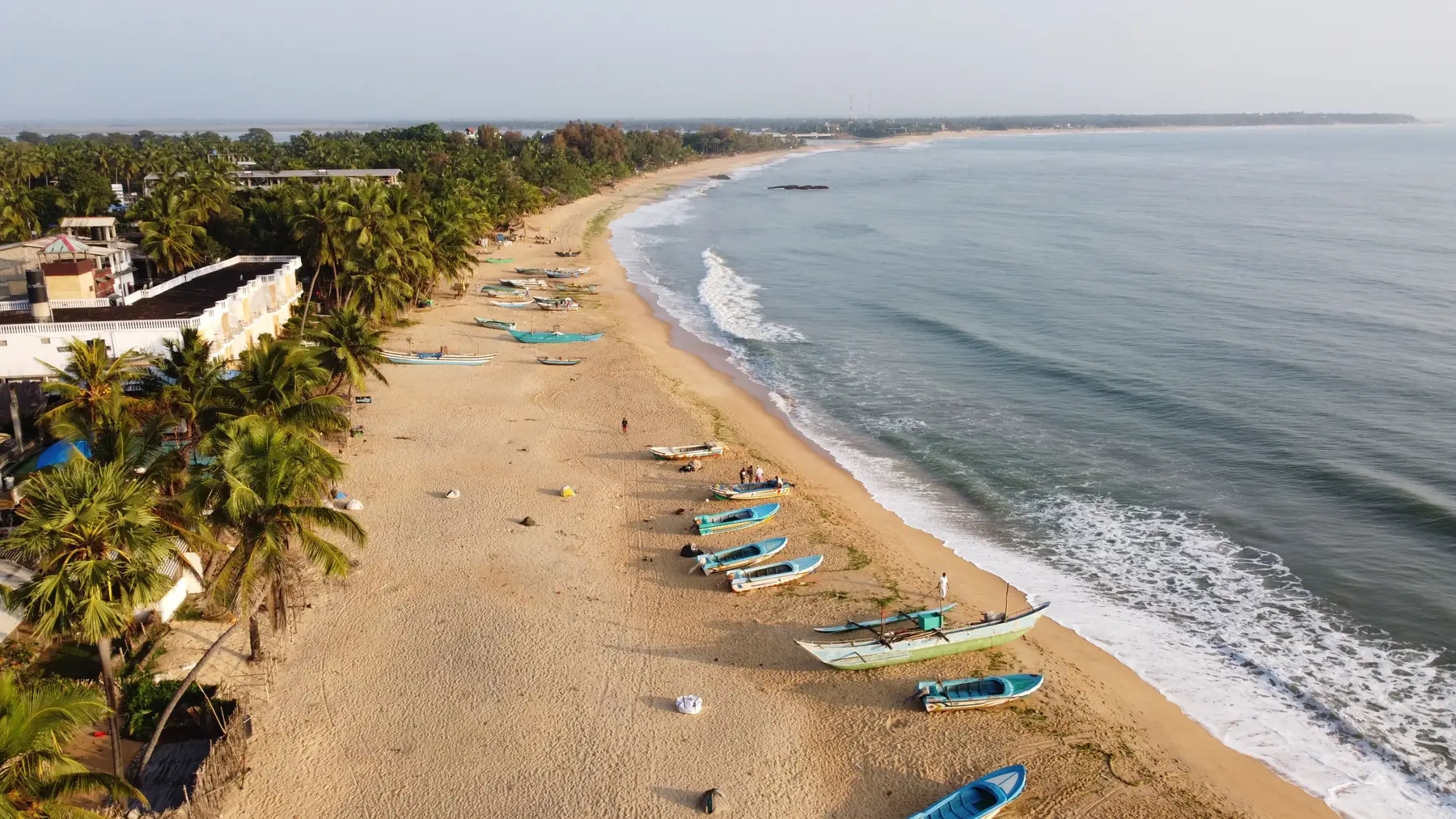
Arugam Bay
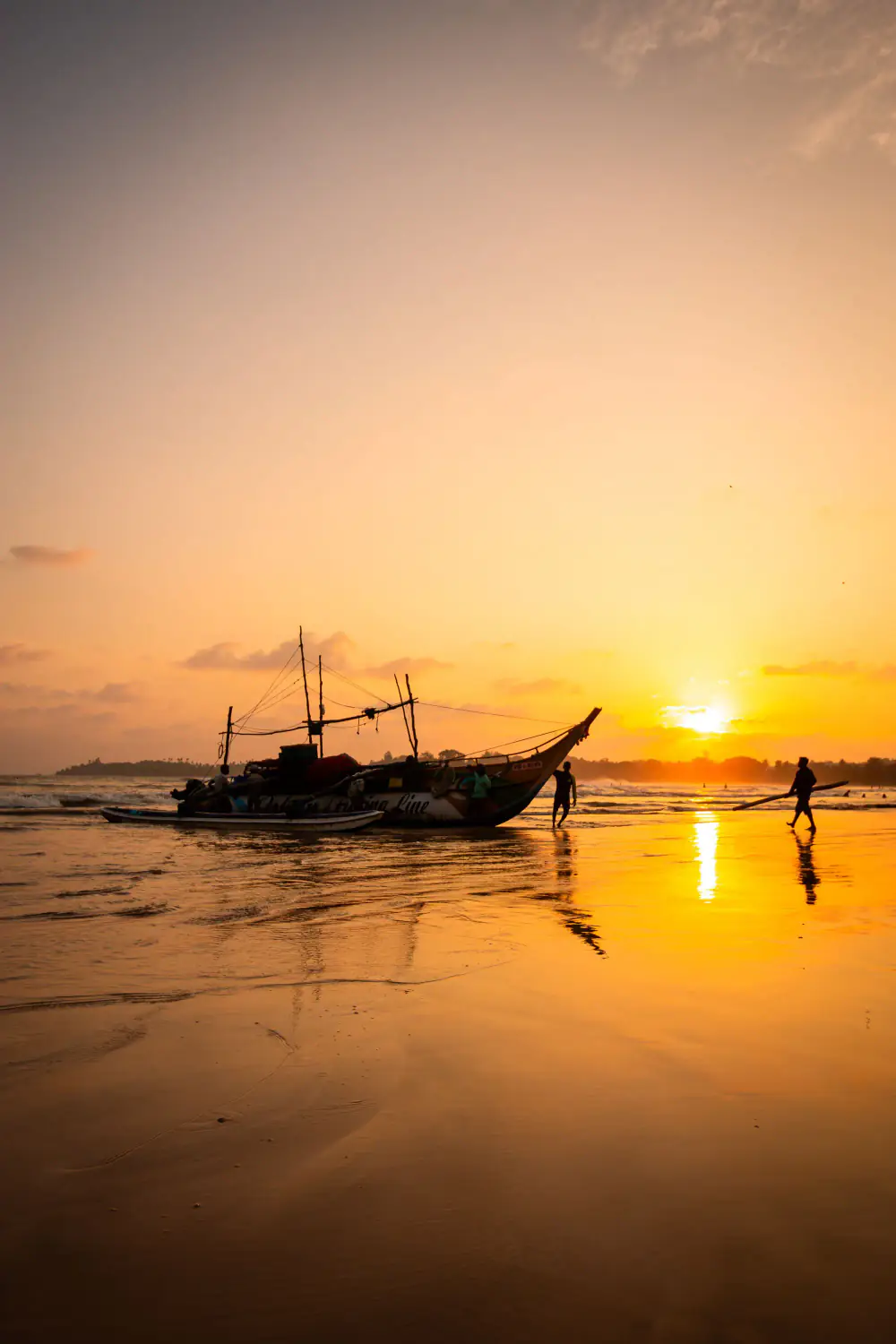
Whale Watching
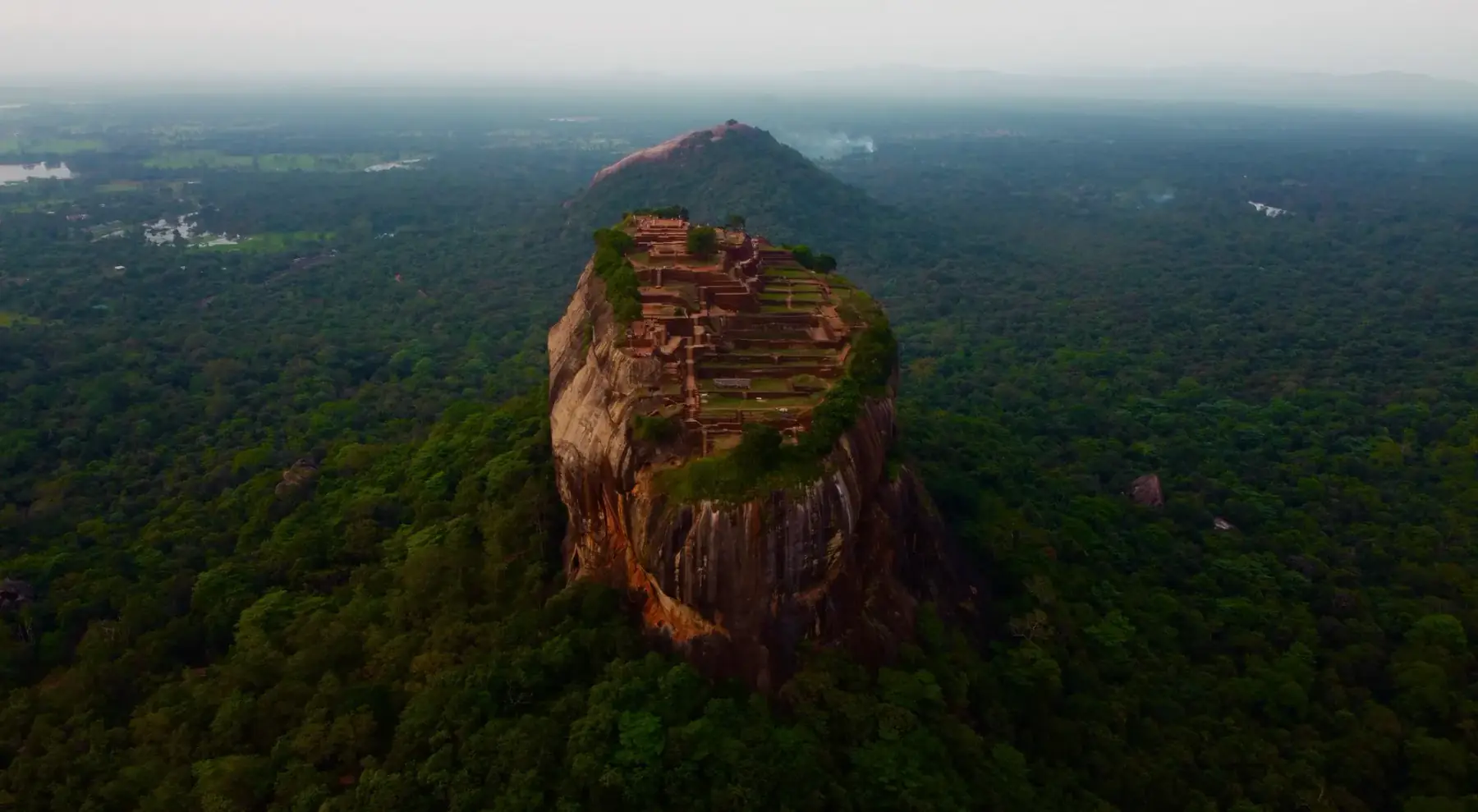
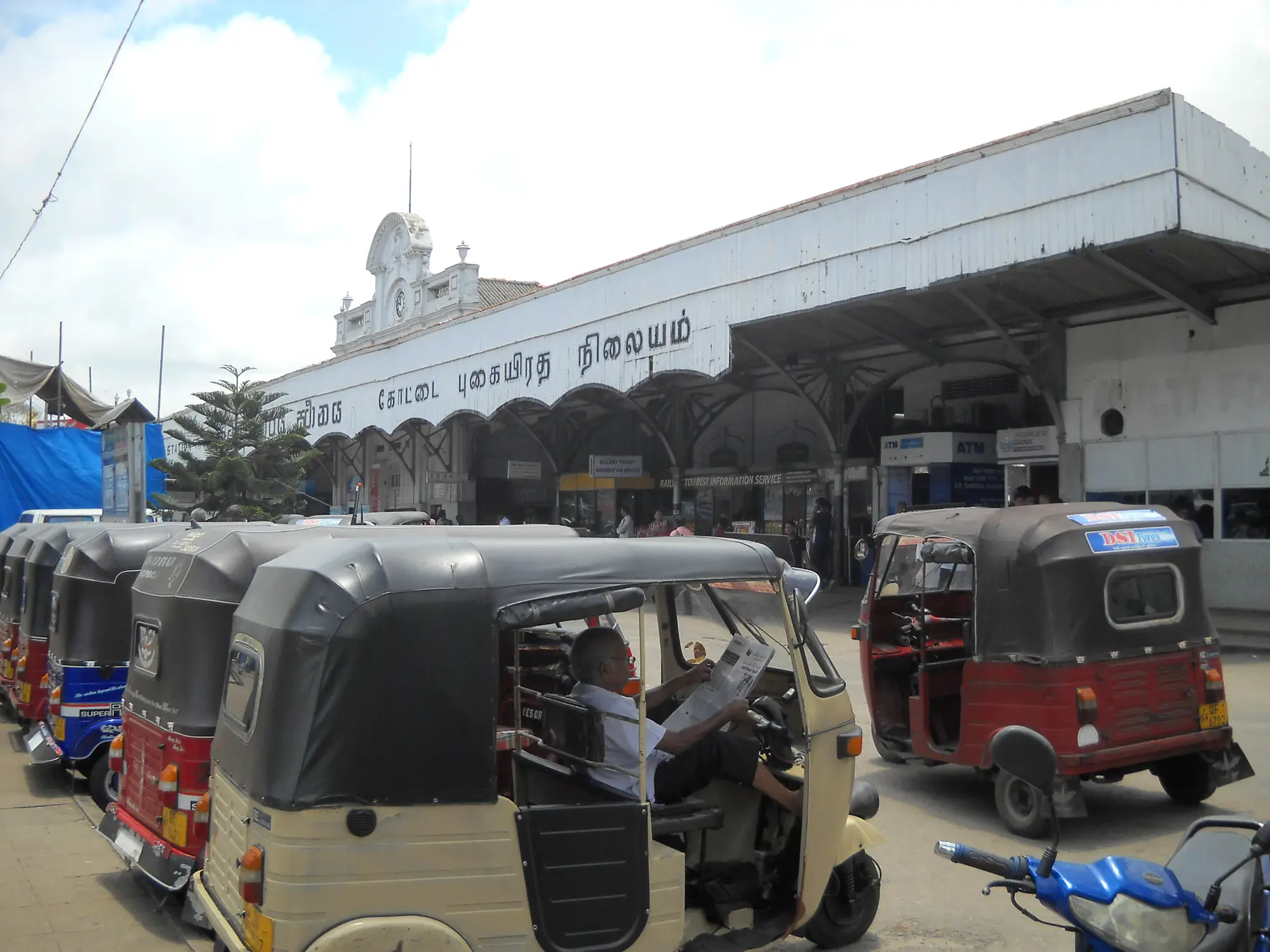
Sri Lanka ETA and Free Visa 2026
Sri Lanka in January
Sri Lanka in February
Sri Lanka in March
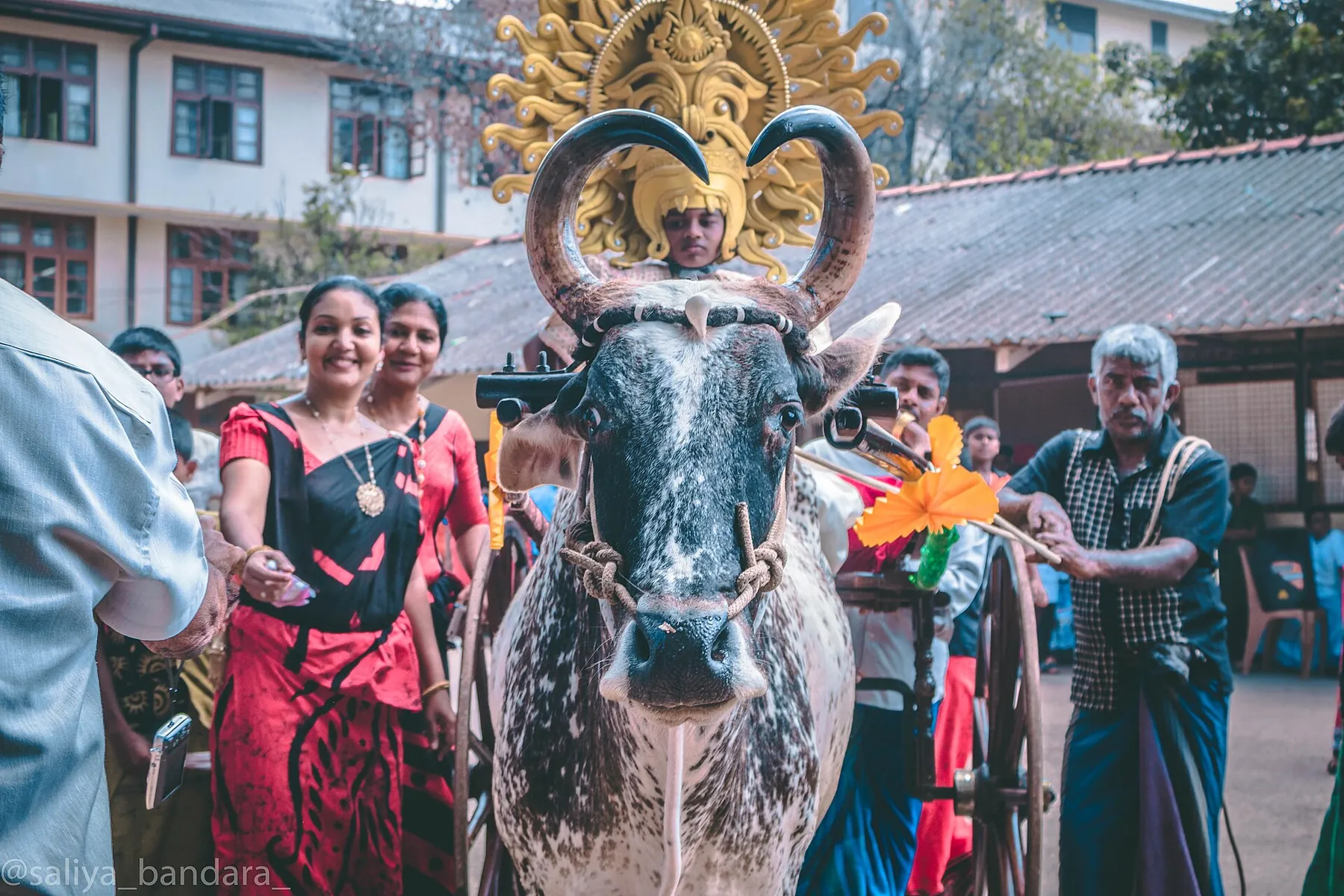
Sri Lanka in April
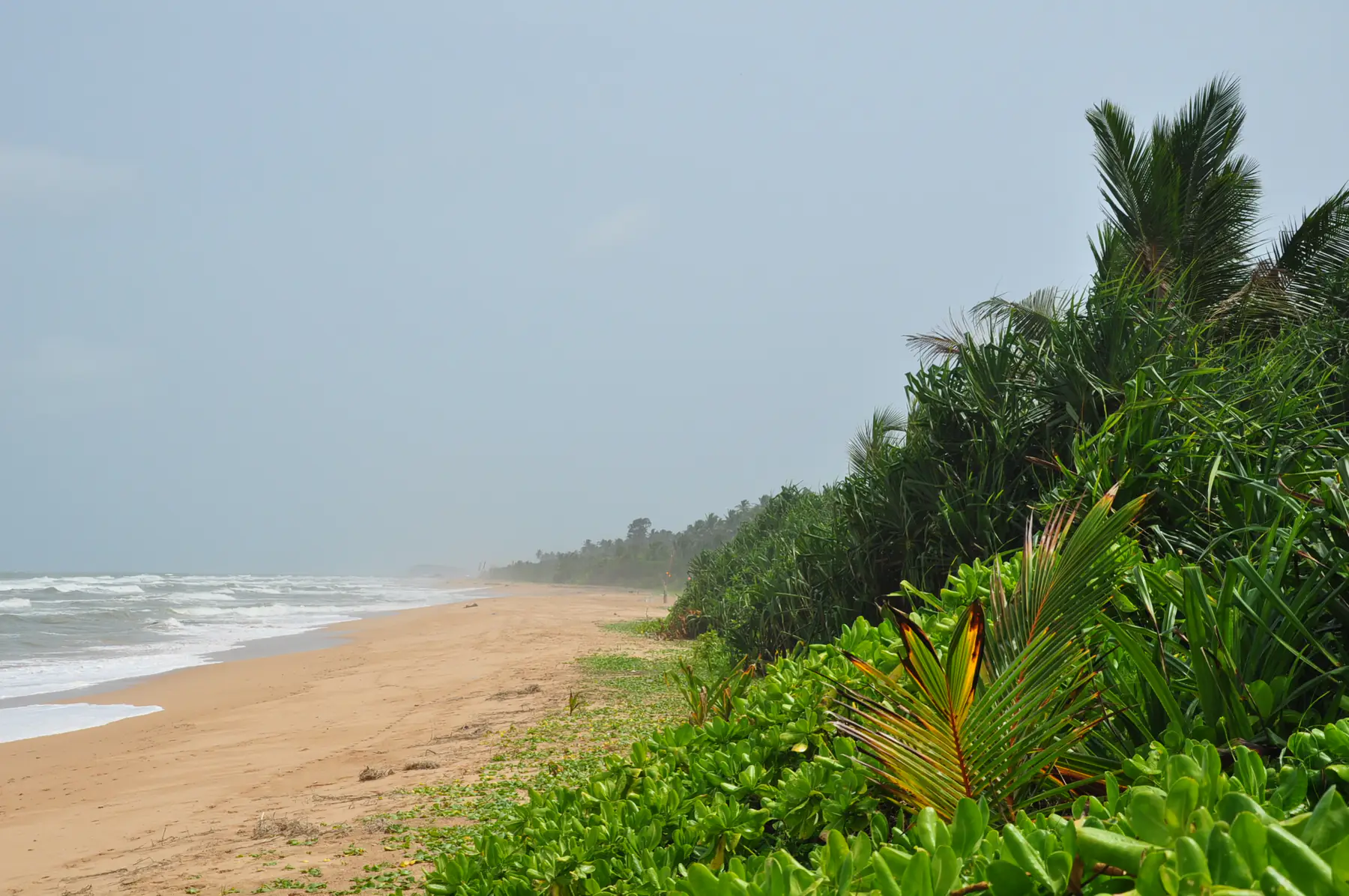
Related guides
All guides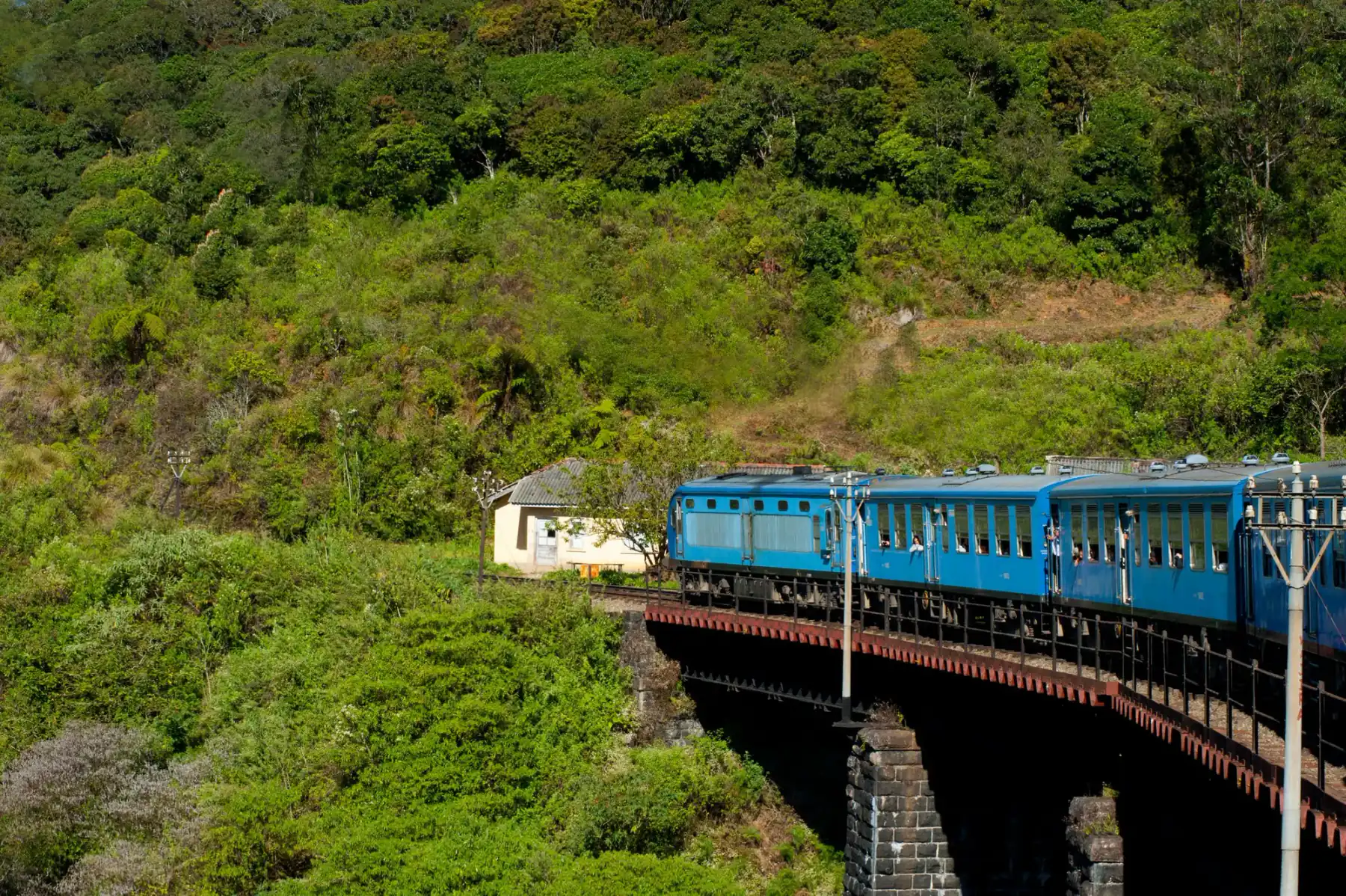
Getting Around Sri Lanka
Plan Sri Lanka transport by checking rail notices, official bus timetables and fares, and a route-specific fallback before each long transfer.
How Many Days Do You Need in Sri Lanka?
There is no universal minimum: choose trip length from the number of regions, transfer days and non-negotiable experiences you can verify.
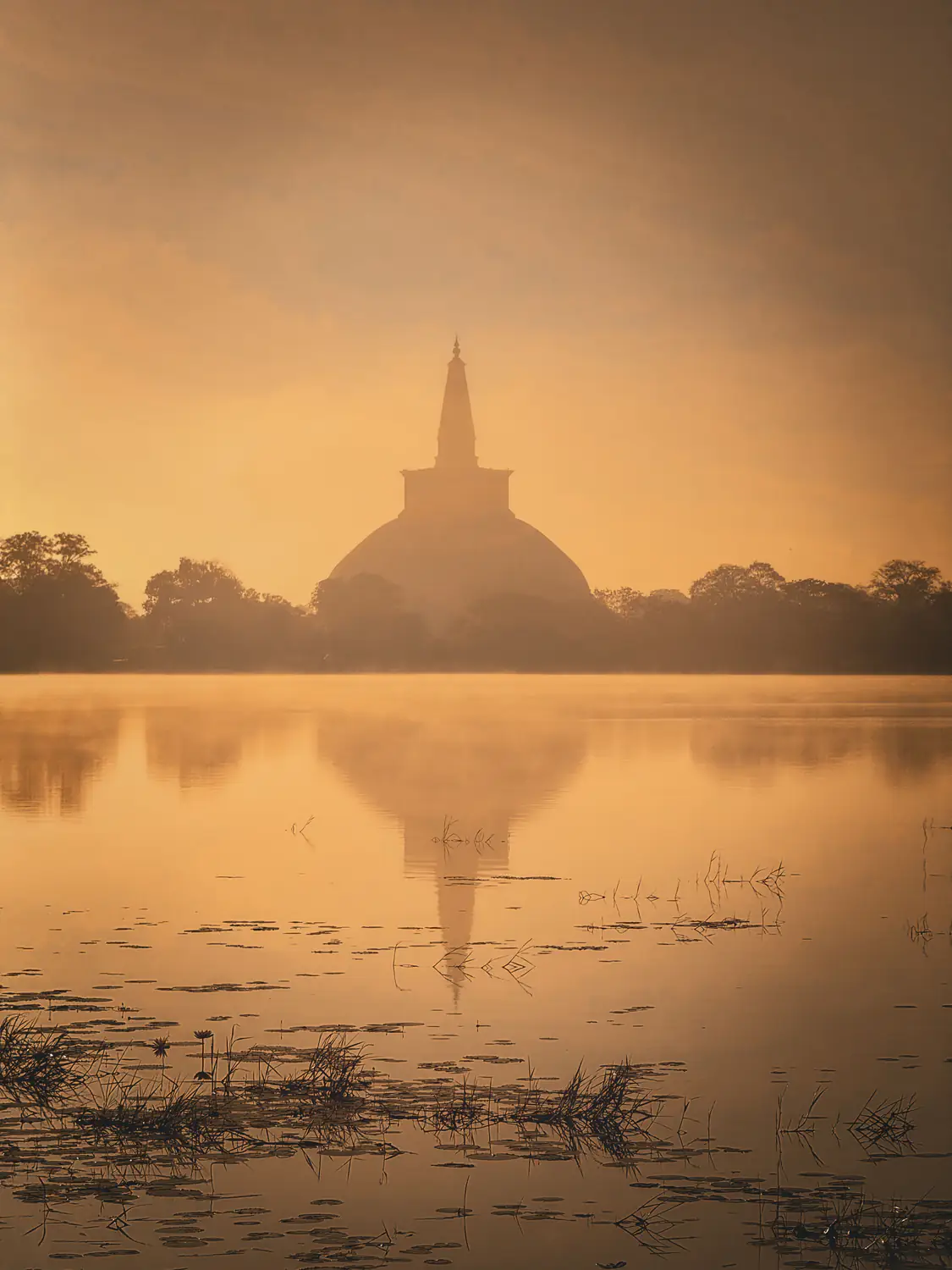
Is Sri Lanka safe to visit?
Sri Lanka is generally safe for tourists. The US, UK, Australia and Germany all allow travel. Their advice levels, last-updated dates and listed risks sit side by side, checked 17 October 2026.